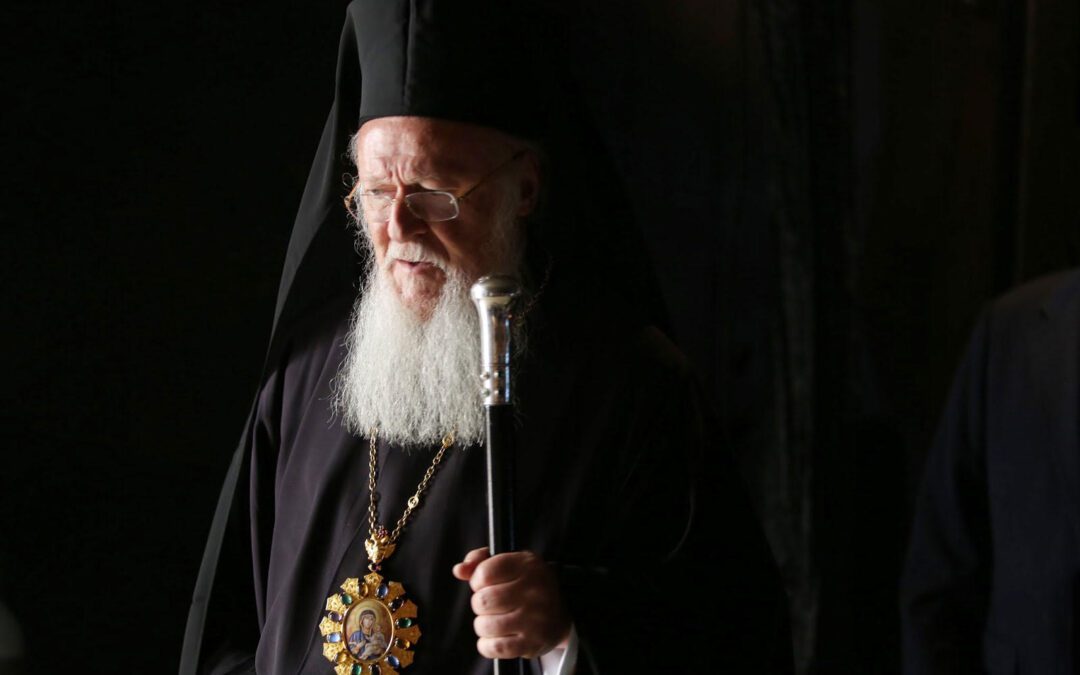
The Apostolic Visit of our Ecumenical Patriarch to America has now concluded. During his time here, His All-Holiness met with world leaders and religious figures. He presided at services, delivered lectures, and received honors—including the prestigious Templeton Prize. These occasions were grand, important, and visible to the world.
There were also public displays of his fatherly love: his open forum with young adults, his gathering and breaking bread with local clergy and their wives, and his meeting with monastics from across the United States. These, too, were visible signs of his loving heart.
Yet, there is another side—something even more special and sacred, something that cameras cannot and should not capture. A side that reveals the Patriarch’s depth of love, his humility, his readiness to suffer with us. I experienced this hidden side of the Patriarch during a private audience.
Amid his exhausting schedule, he took time for me. He asked about my mother, who has recently been placed in the care of a nursing home. He allowed me to speak openly about my own struggles—as a man and as a bishop. He listened with gentleness, offered encouragement, and embraced me as a loving father.
We also spoke about challenges in our Metropolis of Chicago: the health of Bishop Timothy, and the tragic shooting at Annunciation Catholic School in Minneapolis. When I mentioned Bishop Timothy, His All-Holiness did not simply offer sympathy. He picked up the phone and called him. Their conversation brought Bishop Timothy deep joy, especially since he had longed to participate in the Apostolic Visit with his brother hierarchs. The Patriarch’s words of love and encouragement gave him renewed strength.
His All-Holiness also reached out to the Forchas family, whose daughter Sophia was seriously injured in the Minneapolis shooting. Through a video call, he spoke with Sophia and her parents. That moment, with Sophia still recovering, was holy. The Patriarch told her that she would do great things in life, that God loves her, and that she is blessed. He invited her to Constantinople to be his guest at the Patriarchate and to visit the Hagia Sophia. His few words, spoken with tenderness, gave Sophia and her family hope.
While preparing for ordination, seminarians are often reminded that when visiting the sick or suffering, we do not always need perfect words—our presence is often enough. The Patriarch embodied this truth. He was present, prayerful, and loving. His prayers for Sophia’s recovery, for her nameday, and for her family carried more weight than any speech.
Afterwards, the Forchas family shared this with me:
“Sophia is so proud to be Greek Orthodox. She is an eager learner who wants to know so many things about the faith—its practices, history, and all the wondrous traditions.
The video call from His All-Holiness to Sophia is of great comfort to us. To receive an invitation to the Hagia Sophia is amazing and something she wants to start planning already. His All-Holiness wished Sophia a happy nameday, prayed for her full and speedy recovery, and prayed for our family. We extend our deepest gratitude, and a tremendous heartfelt thank you from the Forchas Family.”
These unseen moments reveal who our Patriarch truly is—not merely a global religious leader or a recipient of awards, but a father in Christ: kneeling in prayer, offering strength, listening, comforting. They show us the living reality of our faith: Christ crucified, present with us, suffering with us, loving us.
So, while history will record the Templeton Prize, the meetings, and the speeches, we who were present will remember something deeper. We will remember a father’s heart, one that continues to pray for us, hope with us, and love us in Christ.
† Nathanael
Metropolitan of Chicago