During my recent travels through the Vicariate of Southeastern Missouri and Southern and Central Illinois—visiting parishes, praying together, and listening to the hopes and challenges of our faithful—I was given the opportunity to tour the Abraham Lincoln Presidential Museum in Springfield, Illinois. What I encountered there was more than a history lesson. It was an unexpected window into the inner life of a leader whose life was shaped by two virtues that stand at the very heart of our life in Christ: candor and humility.
These are not abstract ideals or pleasant words we repeat without consequence. Candor and humility are two of the core values of the Metropolis of Chicago, and they form the essential bedrock for Christian discipleship. Candor means speaking truthfully and sincerely because we love the other person—even when that truth may pierce the heart. Humility means being willing to listen, to learn, and to be changed, even when others speak candidly to us. Together, these virtues shape how we relate to one another, how we lead, and how we stand before God.
A Leader Aware of His Limits
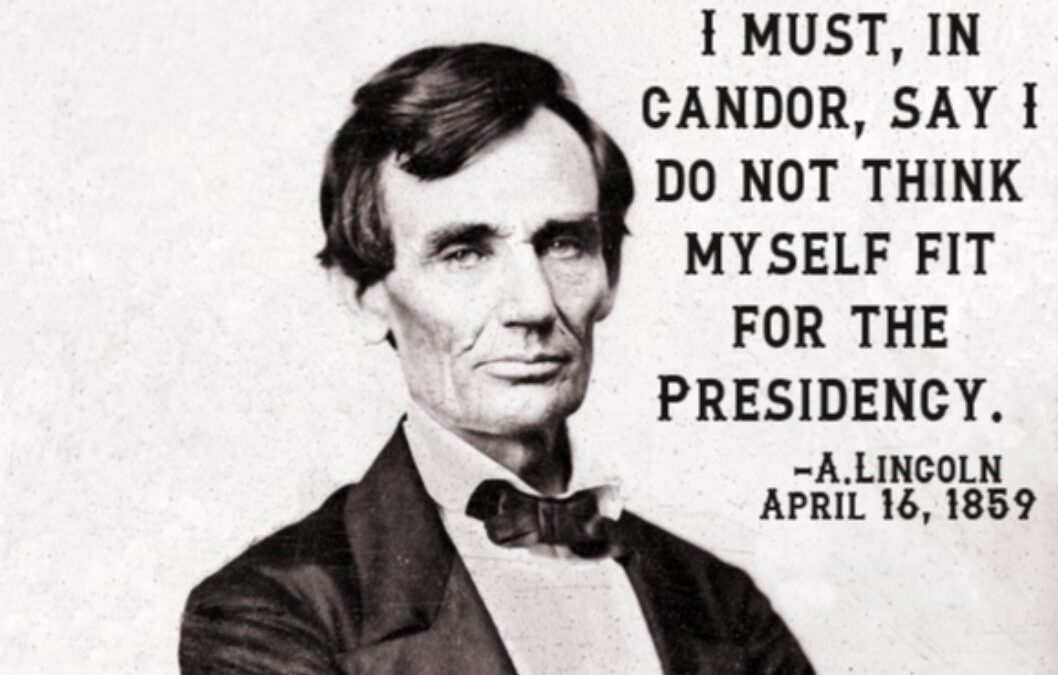
As I walked through the exhibits and listened to the remarkable insight of our guide, what struck me first was not Lincoln’s political brilliance, but his profound awareness of his own limitations. He carried immense responsibility during one of the most fractured periods in our nation’s history, yet again and again, he returned to a deep sense of accountability before God.
Lincoln once wrote:
“I have been driven many times upon my knees by the overwhelming conviction that I had nowhere else to go. My own wisdom and that of all about me seemed insufficient for the day.”
These are not the words of a man posturing as self-sufficient or morally superior. They are the words of a leader who could honestly admit his weakness—and who possessed the humility to run toward the only source of strength greater than himself. This kind of humility does not diminish leadership; it grounds it.
Candor Rooted in Love
Early in the visit—before touring the broader exhibits—I was shown, privately, one of Lincoln’s letters to his half-brother. The letter had been removed from the vault for special viewing, and it was one of the very first items I encountered that day. Reading it felt like being invited into the moral core of Lincoln’s character.
The letter is a masterclass in candor. Lincoln does not hide behind sentimentality or vague encouragement. He speaks directly and firmly, naming hard truths without cruelty. At the same time, his words are unmistakably rooted in love. He sets before his half-brother a clear moral expectation while emphasizing their shared responsibility to care for their ailing mother. Candor, here, is not harshness; it is clarity offered for the sake of another’s growth.
This is an important distinction for us as Christians. Candor is not about winning arguments or asserting superiority. It is about loving another person enough to speak honestly, even when it is uncomfortable.
Humility in the Midst of Conflict
This interplay of candor and humility is explored beautifully in Steve Inskeep’s Differ We Must. Lincoln never claimed moral perfection for himself or for his cause. His refusal to posture as morally flawless—an essential expression of humility—allowed him to build relationships across deep political and personal divides.
Lincoln did not avoid disagreement. He engaged it. But he did so with a posture that sought understanding before victory. His humility made room for dialogue; his candor ensured that the dialogue remained honest. For us, this offers a crucial lesson: humility does not mean the absence of conviction. It means having convictions strong enough to withstand listening.
For Christians, however, the call goes even deeper. Seeing the good in an opponent is only a beginning. Christ calls us not merely to tolerate or respect our enemies, but to love them. Humility becomes the bridge that carries us from surface-level civility to radical, self-sacrificial love. Without humility, candor becomes a weapon. Without candor, humility quietly decays. Together, they form the shape of Christ-like love.
The Compass of the Heart
This capacity for love was forged in Lincoln through personal suffering. His life was marked by profound and repeated loss. Yet sorrow did not harden him; it widened his heart.
Candor allowed Lincoln to acknowledge his grief honestly. Humility, in turn, directed him inward. We often imagine that God is found only “out there,” in solutions or successes. Lincoln’s life suggests something deeper: God is found in the interior depths of the human heart. Loss becomes an invitation—not to despair, but to encounter God even in darkness.
By being candid about his suffering and humble in his dependence, Lincoln became more fully human—and more reliant on God, the foundation of all life.
A Call for All of Us
Leadership rooted in candor and humility is not only necessary for presidents or public figures. It is essential for every Christian. These virtues shape our families, our parishes, our ministries, and our witness to the world.
May we find the courage to speak with loving candor, and the grace to remain truly humble in listening, learning, and allowing God to work in the deepest corners of our hearts. In doing so, may we grow not only as leaders, but as disciples, deepening our relationship with Christ and with one another.